
About The Index
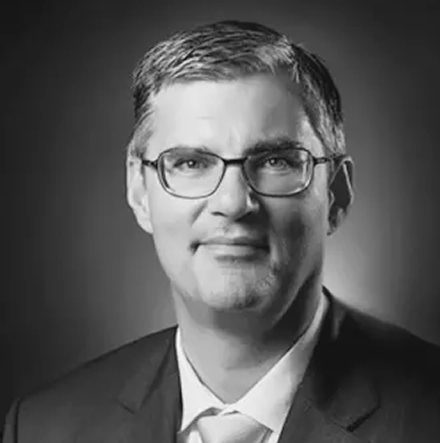
Introduction from Tarek Sultan, Chairman, Agility
Two themes dominate the survey we’ve done alongside this report, the 17th annual Agility Emerging Markets Index.
One is the extraordinary degree of volatility across today’s business landscape: more than 85% of the executives surveyed say they expect more volatility in the year ahead or view volatility as the “new normal.” The second theme is the degree to which businesses see AI and digital infrastructure as both a contributor to volatility and the key to managing it.
Dire predictions for the 2025 global economy did not materialize, despite sharp increases in trade tariffs that rippled across the world after hikes by the U.S.. In October, the World Trade Organization estimated that annual global merchandise trade volume would grow 2.4% – a startlingly upbeat forecast in light of the WTO’s August prediction of 0.9% growth. Also in October, the IMF raised its 2025 world GDP forecast to 3.2%, up from 2.8% just a few months before.
The tariff drag was partially offset by massive 2025 capital expenditure in AI, data centers and related infrastructure – $400 billion alone from Amazon, Google, Microsoft and Meta. But the better-than-expected performances in global GDP and trade have done little to reassure businesses, investors and policymakers about what they face in the near term. The IMF’s World Uncertainty Index doubled from January to November. “Uncertainty has surged to an exceptionally high level globally, and it’s likely here to stay,” the IMF says.
Our 2026 Agility Emerging Markets Index shows what companies and developing countries are doing to manage the uncertainty by re-engineering supply chains, absorbing higher costs and hunting for the talent they need for the future. More than 97% of business executives say their companies have or will make significant shifts in production and sourcing by homeshoring, nearshoring, friend-shoring or regionalizing.
Leaders today are never in a comfort zone, never out of adjustment mode. McKinsey says: “When it comes to geopolitics, today’s CEOs are navigating rugged, unpredictable terrain. The imposition of new tariffs, export controls, investment restrictions, industrial policies, or sanctions is disrupting organizations’ direction of travel and business executives’ carefully laid plans. In fact, it is shifting the entire competitive landscape. The CEO’s every decision, whether to push forward, change course, or retreat, must be carefully considered – and then reconsidered.”
Many are counting on AI to help them cope with the turbulence. In our survey, executives say AI is – all at once – the challenge they’re least prepared for, a top business priority, and the main driver of supply chain diversification. But it’s obvious that AI has moved from experimental to essential in the span of two years: more than 98% say their companies are using AI. Weak digital infrastructure is the biggest gap in and biggest threat to supply chains, they say.
In a world of accelerating change – where AI reshapes industries and clean-energy networks power new economies – the very definition of “infrastructure” is evolving. Once, it meant roads, ports, bridges, and power lines. Today, it also means the invisible architecture of digital life: fiber-optic networks, cloud data centers, satellites, and AI systems that keep societies connected and economies running. That’s why this report and the analysis of Ti, our research partner, give so much weight to the “digital readiness” of the 50 countries in the index.
Countries and companies that approach physical and digital infrastructure as one are the likely winners in years ahead. They will be able to extend or replace aging Contents 7 hard assets, deal with the demands of growing urban populations, use technology to expand infrastructure demand and capability. They will have a head start on decarbonization, which requires massive grid, storage and renewable build outs. And they’ll be magnets for tomorrow’s most talented and skilled workers.
Finally, a word about trade. As commentator George Will has observed, free trade has normalized something that was unknown for most of human history: growth. And despite getting a bad name, trade has provided huge dividends for mankind since the era of globalization began: In 1950, almost 60% of the world’s population lived in what the World Bank terms “extreme poverty,” on $2.15 per day. Today, only 8.5% do.
And today, 80% percent of global trade still takes place under WTO rules. Customs procedures, transparency standards and market-access guarantees all derive from the WTO’s architecture. Without it, fragmentation would deepen and geopolitical power would dictate commercial outcomes. Today, the WTO is quietly undergoing the most significant transformation in its 30-year history.
Emerging markets countries, small businesses, and disadvantaged populations have a huge stake in trade reform. The WTO’s emerging AI framework will determine whether cloud infrastructure investments are economically viable, whether cross-border data flows remain predictable, and whether smaller competitors can access the same digital tools as incumbents.
The WTO agenda explicitly prioritizes digital trade facilitation that cuts customs timelines from weeks to hours. It focuses on simplified regulatory compliance in order to make exports economically viable for smaller players. It seeks to open access to global value chains and support for women and youth-led business enterprises. Let’s hope it succeeds.
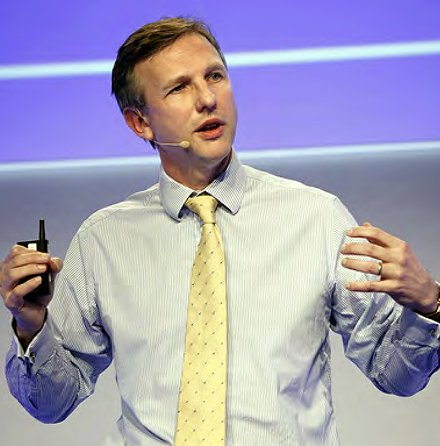
Introduction from John Manners-Bell, CEO, Transport Intelligence
Only time will tell whether 2025 was a watershed moment in recent political and economic history – but it certainly feels like it. President Trump’s decision to impose swinging tariffs on nearly all the USA’s trading partners was, in effect, a final rejection of the paradigm of globalisation which at times over the past few decades has seemed unchallengeable. Whilst the US administration’s trade policy has gained most attention, many other countries, as well as the European Union, have also introduced protectionist barriers. These have included tariffs on Electric Vehicles and steel, phytosanitary controls, ethical restrictions and carbon-related taxes. The World Trade Organization (WTO) asserts that trade covered by tariffs in G20 economies increased about four times compared to the year before, the largest increase in the history of WTO trade monitoring.
As might be expected, this has had a profound effect on business confidence and trade patterns, demonstrated by the findings of this year’s Agility Emerging Markets Index. One phrase which came up time and again throughout our research was ‘structural uncertainty’, caused by geopolitical fragmentation, trade policy volatility and uneven economic momentum.
How emerging markets react to this new environment is critical to their long term prospects. The demand for global trade is still strong but patterns are changing as supply chains diversify. Western businesses are looking for alternative or complementary suppliers to those presently based in China in order to bolster their supply chain resilience. Chinese exporters, on the other hand, are seeking out new markets for their products, partly as a result of American tariffs and partly due to overcapacity caused by domestic economic weakness. This brings new opportunities for many emerging markets in Asia and even in Africa, Latin America and the Middle East, but only to those which can meet the needs of global manufacturers and retailers. Bottlenecks in Africa, for instance, continue to constrain the translation of infrastructure potential into logistics performance. This is in contrast with the Gulf States which look set to capitalise on regional economic flows of goods and services, not least driven by investment in data centres and the development of its own manufacturing sector.
Indeed, development within regions and even within countries can be uneven. As our Index highlights, advances in infrastructure investment and trade connectivity are not always matched by institutional or technological capabilities. Whilst advanced digital tools are being embedded in some markets across planning, procurement and execution, others are constrained by skill, infrastructure and access to capital. Since its inception, the Agility Emerging Market Index has enabled investors to differentiate between those countries which have fully embraced the opportunities provided by infrastructure investment and institutional reform and those which have lagged behind. As an increasing number of multinationals look to restructure their supply chains across multiple countries, providing an attractive value proposition has never been so critical.
This year’s Index also reveals that whilst the market landscape is becoming more challenging, many businesses feel that they are better equipped than ever not only to cope with the pressures but prosper. Almost a fifth of respondents to one of our survey questions said that they were deploying AI tools to improve forecasting. Access to technologies is seen as a driving force behind diversification, a key component of supply chain resilience.
As this year’s Index concludes, movement across rankings reflects deeper reassessments of where capacity, institutional strength and connectivity align with the needs Contents 9 of reconfigured supply chains. In that context, markets that combine infrastructure investment with regulatory clarity and digital capability are in a better position to capture diverted trade and long-term investment.
Companies aren’t retreating from volatility but instead are engineering around it. Resilience and margin protection now sit at the heart of their strategies, whilst tech and AI are facilitating their diversification.